The metabolic matrix
In this issue: The new one-liner rule to eat by, some surprising new uses for broccoli and sweet potatoes and protein-packed ramen.

Hello! And thank you for reading Technically Food, my Substack about all things food. One of my favorite jobs as a writer is talking to experts. We probably all appreciate talking to folks who intimately know their field, right? The confidence they have in what they know, plus, for me, learning the journey they took to get where they are. I have a hard time not wanting to know everything they know.
A few months ago, I interviewed Robert Lustig, an endocrinologist and author of several books including “Metabolical: The Lure and the Lies of Processed Food, Nutrition, and Modern Medicine.” This busy guy is somehow managing to write another book, running a fiber-based startup plus doing university work. When we talked, he talked fast. Our conversation was about how challenging it is to navigating the supermarket aisles.
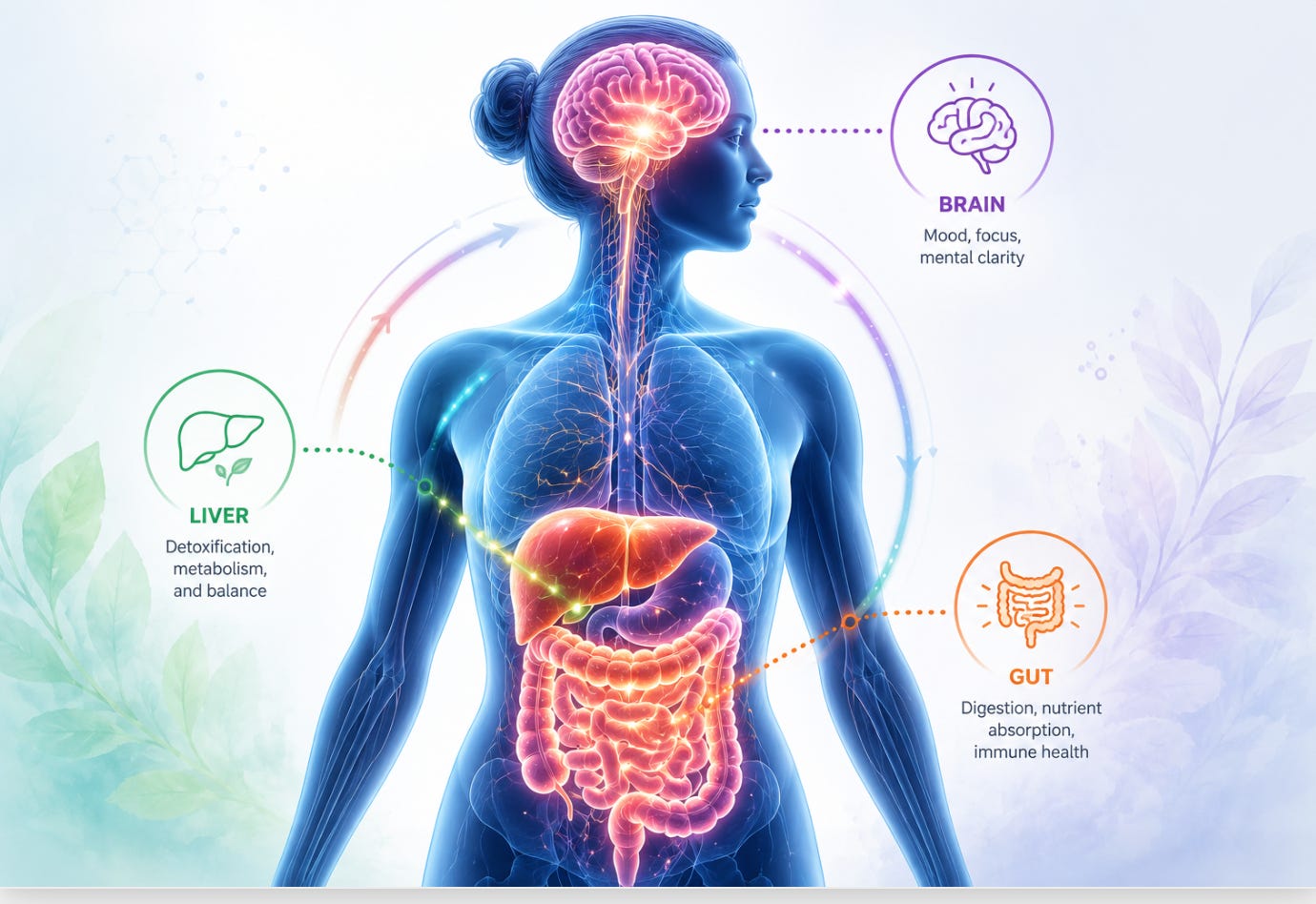
A team, along with Dr. Lustig, worked with a dairy company in Kuwait (KDD) to reformulate a portfolio of foods that weren’t the healthiest. The business goal was to make KDD’s ultraprocessed food (UPF) healthier and that by showing it was possible it would inspire other food companies to reformulate their product lines to “improve the metabolic health and well-being of consumers worldwide.” Ah, if only Big Food was so easily influenced!
This idea isn’t new. To remake foods so they’re better for human health. And maybe you recall my recent Substack where I covered the NKD Doritos launch? Doritos rushed to remove artificial coloring from the chips — once government officials began passing new laws — but the chips are still UPF! They aren’t going to improve anyones metabolic health.
Let’s add to that. Many of you may know the one-liner from Michael Pollan: “Eat food. Not too much. Mostly plants.” The team working with the Kuwaiti dairy company came up with a one liner they could apply when looking at UPF. In 2023, their paper, “The Metabolic Matrix: Re-engineering ultraprocessed foods to feed the gut, protect the liver, and support the brain,” was published in Frontiers.
In it, the team presented an idea for looking at UPF that centered around what they called ‘the metabolic matrix.’ And they crafted a one-liner a la Pollen that was more outcome specific: “Protect the liver, feed the gut, support the brain.” Dr. Lustig called them the GLBs for gut, liver, brain.
And here are the precepts they developed around the one liner: Any consumable that does all three is healthy whether it’s UPF or not. Any consumable that does none of the three is poison. Any consumable that does one or two can be somewhere in between.
Dr. Lustig told me this: You want to protect the liver from fructose, alcohol and heavy metals. You want to feed the gut fiber—soluble and insoluble— plus microbes. You want to support the brain with micronutrients, antioxidants and short chain fatty acids (fermented foods or from fiber). Our diet of UPF and foods high in omega-6 vs omega-3 are leading to elevated inflammation, which leads to the rise in chronic disease. Our supermarket aisles are full of foods we’d have to chuck out the door if we used Lustig’s GLB mantra.
What do you think? Is it a rule that might help you change your habits? A friend recently said if you’re not going to change your lifestyle by knowing something new, then what’s the point? It gave me pause. And then I laughed it off. I always want to learn something new and when I’m thinking of future me, I have to hope that my hard work to eat better moved the needle.
I hope you learned something new here. Have a great week, weekend, summer, June.
I’m just here for the tidbits:
Kudos to UK-based Upcycled Plant Power (UPP), for finding a profitable business model that takes leftover broccoli stems and leaves and turns them into protein and fiber. How much protein is in broccoli? Good question. I looked it up. First you should know that all plants have protein. Perhaps you’re underwhelmed by the number: It’s 2.5-3 grams per chopped cup. But broccoli has more protein per calorie than steak. And spinach, per calorie, is equal to chicken and fish. But, big but, vegetables are low calorie so you’d have to eat sooooo much in one sitting to get the same amount of protein. Lentils, chickpeas, and peas are the vegetables with the highest protein percentage but let’s hear it for the oft maligned broccoli!
What’s that, you don’t like broccoli? How about this. A group from Appalachian State University won a $1.82-million-dollar grant from a local innovation hub to develop non-dairy milk from sweet potatoes. And because sweet potatoes are naturally sweet, and creamy, the end product won’t have all the UPF gunk that most traditional alt-dairy has. In addition to milks, the team hopes to create ice cream, yogurt, even hot sauce all from the carbohydrate staple of North Carolina of which there’s plenty. Sixty percent of US sweet potatoes come from North Carolina.
If this high-protein ramen from Huel had actual vegetables in it I might consider it. Instead it has a zillion additives and protein extracted from vegetables.
What I’m reading/watching/listening to:
I’m always keen to hear more people poke holes into supplements and here’s a great episode from Planet Money on the topic. Wondering what supplements I take? Here’s my short list: I take biotin for stronger hair and nails. I take creatine, which I’ve found to be tremendously helpful. And that’s it.
On a recommendation by Javier Zamora, the author of Solito, I read a memoir by a neurosurgeon who hopped the border fence between Mexico and California in his 20s. After a string of challenging jobs, including farm work, and barely knowing English, he made his way to Cal, Harvard, UCSF, John Hopkins and now the Mayo Clinic. You can read the book, or watch him in The Surgeon’s Cut on Netflix.
My favorite show of the year hands down is “DTF St. Louis” but after that is “Margo’s Got Money Troubles.” The book was also good. Light, but good.
I do care about what goes inside and how it is processed. Thanks always for such good information about UPF’s and beyond!!
Help me understand this claim about traditional alt-dairy: "all the UPF gunk that most traditional alt-dairy has." Source? "Most" is a pretty bold word. The alt-milk I buy has an ingredient list like "water, soybeans" or "water, oats." Yes, some products have various sweeteners or vanilla extract, but those don't work in recipes; I figure those are mainly for cereal.
Arguably the MOST traditional alt-dairy is rice milk. Rice Dream contains water, brown rice, canola oil for creaminess, salt, and is now fortified (unlike the varieties from 20-30 years ago) with calcium, vitamin A, D2, and B12. That's it. Does adding vitamins render a product full of "UPF gunk?" Seed oil? Carrageenan isn't even that prevalent anymore.